OpenClaw vs. IronClaw: Which AI Agent Framework is Best?
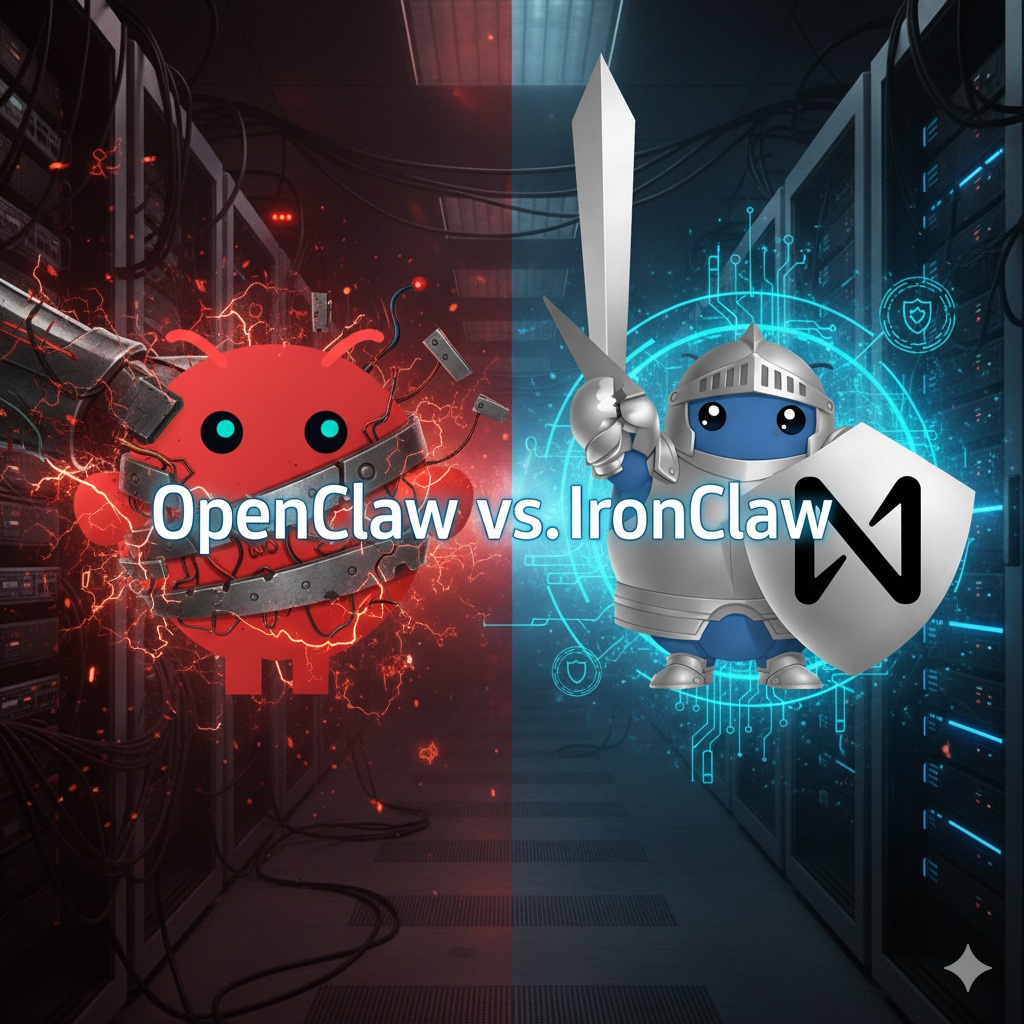
If you’ve been anywhere near dev Twitter or GitHub lately, you’ve watched the OpenClaw saga play out in real time.
What started as a weekend hack to let an LLM control a desktop basically broke the internet, caused a massive run on Mac Minis, and eventually fractured the open-source AI agent community right down the middle.
Today, developers have two dominant frameworks for running autonomous AI agents: OpenClaw and IronClaw.
At a glance, they do the exact same thing. But under the hood, they represent entirely different philosophies on how agentic software should be built. And if you are building anything that touches cryptocurrency, smart contracts, or real money, choosing the wrong framework is essentially begging to get your wallet drained.
Here is what actually happened behind the scenes, how the tech stacks compare, and why the framework you choose matters.
The OpenClaw Craze (and Its Fatal Security Flaw)
OpenClaw started in November 2025 as “Clawdbot”, built by Austrian developer Peter Steinberger. Steinberger was unapologetically vocal about his “vibe coding” approach—meaning he barely wrote the code himself, relying heavily on AI code editors to hack the architecture together.
Whatever you think of vibe coding, it worked. By January 2026, the repo hit 100,000 stars in a matter of days. (Anthropic got mad about the naming rights, leading to a temporary rebrand to “Moltbot” before finally settling on OpenClaw).
The appeal was obvious. It’s a Node.js/TypeScript bot that runs locally on your machine, hooks into your WhatsApp, Discord, or iMessage, and just does things. You tell it to organize your calendar or scrape a website, and it figures out the terminal commands and browser clicks to make it happen.
But there is a massive catch: OpenClaw essentially demands zero-least privilege, root-level access to your host machine.
You are giving an LLM—software famous for hallucinating and being highly vulnerable to prompt injections—direct access to your shell, your file system, and your API keys. From a cybersecurity perspective, it’s a ticking time bomb. If someone tricks your OpenClaw agent via a maliciously crafted webpage, they could theoretically wipe your hard drive or exfiltrate your environment variables.
The Culture Clash: Why OpenClaw Hates Web3
As with anything that goes viral, the crypto opportunists showed up almost immediately. Degens spun up unauthorized $CLAWD and $OPENCLAW meme coins on Solana, aggressively spamming the project’s channels. At one point, scammers even managed to temporarily hijack Steinberger’s X and GitHub accounts to post phishing links.
Steinberger snapped.
He didn’t just disavow the tokens; he went on a full anti-crypto crusade. He instituted a zero-tolerance policy in the OpenClaw Discord, auto-banning users for even neutrally mentioning crypto, Web3, or blockchain. He publicly tweeted, “My best advice for men in their 20s is to not waste time on cryptocurrency.”
By mid-February 2026, Steinberger announced he was moving OpenClaw to an independent foundation and taking a job at OpenAI to build personal agents.
The message to the Web3 community was loud and clear: OpenClaw wasn’t built for you, its creator actively resents you, and the framework’s architecture is fundamentally unsafe for handling private keys.
Enter IronClaw: NEAR AI’s Enterprise-Grade Fix
Illia Polosukhin and the team at NEAR AI saw exactly what was happening. The core idea of OpenClaw was brilliant, but running a root-access TypeScript bot near a crypto wallet is suicidal.
In February 2026, NEAR AI dropped IronClaw.
It isn’t a fork; it’s a ground-up rewrite in Rust specifically designed to fix the gaping security holes in the OpenClaw model. IronClaw ditches the “move fast and break things” vibe for a strict, defense-in-depth architecture.
If you are dealing with Web3 infrastructure, automated trading, or DeFi protocols, IronClaw is the only serious option. Here’s why the tech stack is vastly superior for security-critical applications:
1. Sandboxing via WASM
OpenClaw runs commands on your raw OS. IronClaw runs all untrusted external tools and generated code inside isolated WebAssembly (WASM) jails. Even if your LLM gets hit with a prompt injection attack, the agent is physically trapped in the sandbox. It cannot touch your host system or read local files it shouldn’t have access to.
2. Hardware-Level TEEs
If you host on the NEAR AI Cloud, IronClaw agents run inside encrypted Trusted Execution Environments (TEEs). This means the memory and computation are hardware-encrypted. Not even the infrastructure provider can peek in and steal your wallet seed phrase.
3. Boundary Credential Injection
This is the big one. OpenClaw casually dumps your API keys into environment variables or local configs where the LLM can accidentally read or leak them in a chat interface. IronClaw makes sure secrets never enter the LLM’s context window. Instead, keys are injected at the host boundary just milliseconds before an action executes. The system also actively scans outputs to ensure the LLM isn’t trying to smuggle sensitive data out.
4. Production-Ready Database Architecture
Instead of relying on fragile local files or SQLite for memory (which OpenClaw does), IronClaw defaults to a production-ready PostgreSQL setup integrated with pgvector for secure, persistent vector data storage.
Feature Comparison Matrix
Here is a quick breakdown of how the two frameworks stack up:
| Feature | 🦞 OpenClaw | 🛡️ IronClaw |
|---|---|---|
| Primary Language | TypeScript / Node.js | Rust |
| Execution Layer | Host machine / Root access | WebAssembly Sandboxes, TEEs |
| Secret Management | Exposed in memory/env vars | Boundary Injection + Leak Scanners |
| Memory Storage | Local files / SQLite | PostgreSQL + pgvector |
| Crypto/Web3 Vibe | Hostile / Banned on Discord | Built by NEAR AI, native Web3 support |
| Best Use Case | Local hacking, homelabs, IoT | DeFi automation, enterprise, secure wallets |
The Verdict
OpenClaw deserves its place in the history books. It proved that local AI agents could be highly capable, completely frictionless, and incredibly fun to build with. If you just want a bot running on an old Raspberry Pi to scrape Wikipedia and control your smart lights, it’s a fantastic tool.
But if you are building in Web3, or writing code that handles actual money, using OpenClaw is negligent.
You need cryptographic guarantees. You need memory safety. You need a system that assumes the LLM will eventually be compromised and builds physical walls around your private keys to prevent total loss.
If you touch crypto, the debate is over. You need IronClaw.